
TL;DR
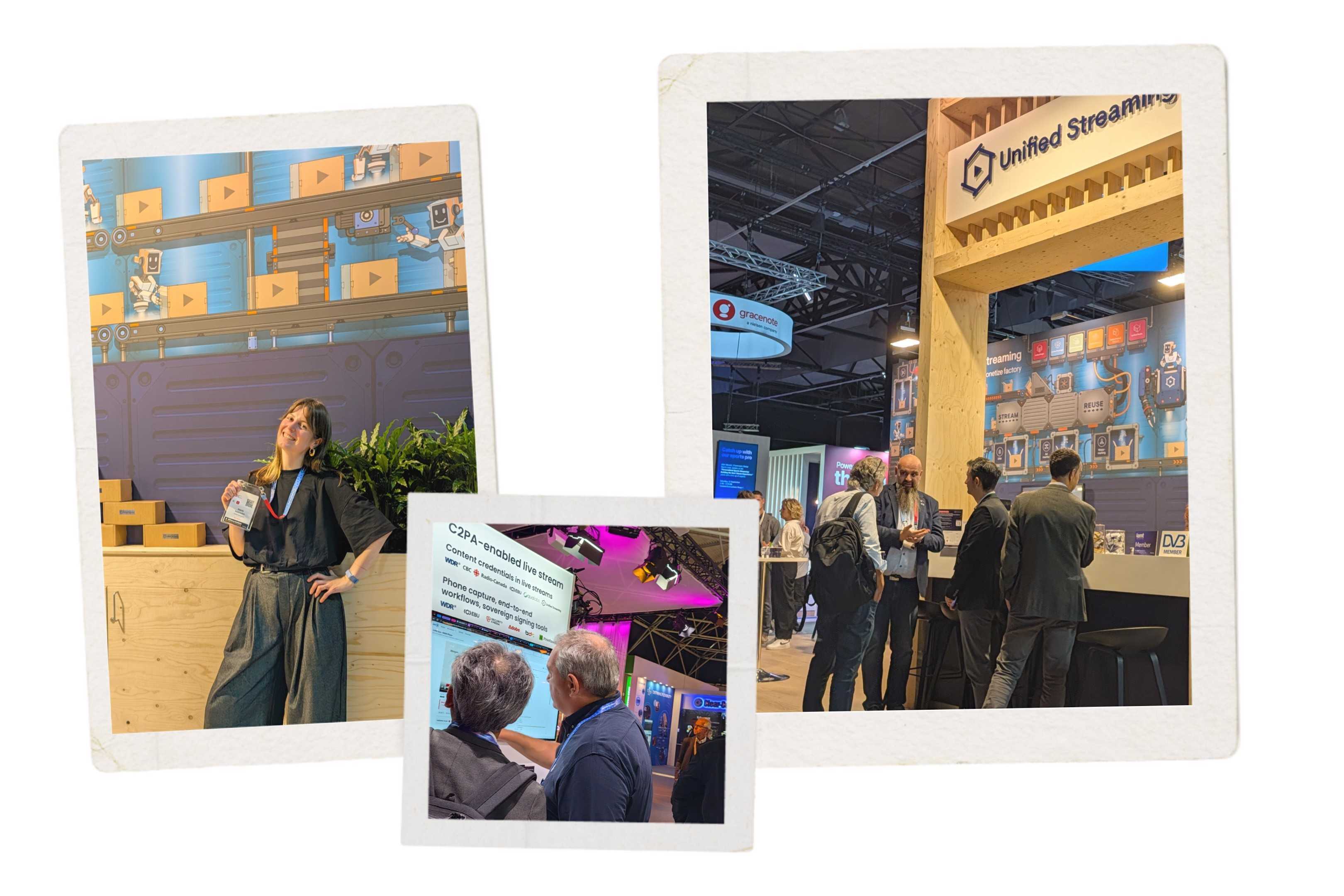
IBC 2026 was fun. We spent time with tech partners and customers discussing AI, FAST, MoQ, C2PA, and all the other acronyms that keep our industry busy.
Zooming out from individual technologies, however, reveals a more pressing matter.
Media companies have spent years adding platforms, formats, destinations, and business models. The next challenge is getting more from that existing infrastructure. That means simplifying workflows, creating more value from content, adapting faster to future changes, and connecting technology investments to revenue more directly.
So the post-IBC question is, before piling on complexity, what shall we optimize?
Let’s dive into the to-do list.
Stream → reuse → monetize: one content lifecycle, multiple opportunities
Often, conversations we had on the floor at IBC led straight to the popular topic of how to optimize, and how to get more from existing infrastructure. To get this result, taking a look at your entire content lifecycle is a pretty good place to start.
Let’s say you stream a football game. You offer restart and catch-up TV, use live2VOD to add it to your archive, create clips for future use, and launch virtual channels that combine those clips with other VOD assets, or even live streams. All to open up new monetization opportunities.
These services feed off the same original content, but they’re usually managed separately. Every additional copy, re-encode, storage layer, or processing chain adds cost and complexity.
A better, more efficient approach would be to treat live, VOD, and archive content as one reusable pool. Then, creating new formats, reaching new audiences, and monetizing existing assets—without rebuilding the pipeline each time—becomes simpler.
🎡 Post-IBC task: Map your live, VOD, and archive workflows together to identify needless copies, processing, and storage. And verify that your infrastructure is modular and standards-based, so that, as your needs evolve, you can integrate new tools and add outputs.
Give AI an actual job
No surprises here. AI was everywhere at IBC, again. The most useful examples of AI use cases were also the most prosaic (aka least dramatic): metadata enrichment, clipping, localization, monitoring, content discovery, search, and workflow automation.
The useful mission for AI projects in 2027 is to reduce manual work and increase operational efficiency, leaving people more time for work that requires human judgment, creativity, and expertise.
It’s hard to resist the temptation to apply AI everywhere when you already have access. As the New Zealand singer Lorde sang, “When you're holding a hammer, everything looks like a nail.”
But AI projects should begin with an operational problem, not with a technology looking for a spot for AI to be deployed.
We wrote an article on how AI can help you to automate some of the tasks related to our products. Don’t set big targets, start small.
🎡 Post-IBC task: Identify repetitive, expensive, tedious, or time-devouring tasks that depend on people, and prioritize handing those over to AI.
Keep an eye on MoQ
Media over QUIC, or MoQ, felt like a main character at IBC 2026. The technology intersects with reaching low-latency for potential applications in live sports and other experiences where delay really affects the product.
It’s still early days. There are open questions around standards, deployment, and situations in which MoQ creates enough value to justify implementation.
But it is worth watching now, especially if low latency is already a limitation in your workflow.
🎡 Post-IBC task: Unified Streaming’s team is actively researching the subject ourselves. If you're testing MoQ, considering it, or simply holding a strong opinion about where it fits, please reach out to our team and share your thoughts.
Make launching a new channel much less dramatic
Virtual channels are maturing beyond FAST (free ad-supported television). Content owners are experimenting with seasonal channels, thematic pop-ups, regional feeds, sports experiences, and more targeted programming. Different audiences can receive different ads, languages, promos, programming, and combinations of live and VOD content. The technology to support such personalization is already here.
How do you scale the operation of more channels without getting bogged down in time and money expenditure? ROI means king in another language for a reason.
The cheaper it is to test a new channel idea, the more freedom commercial and editorial teams have to experiment. Sports pop-ups, event channels, regional feeds, and temporary services should increasingly behave like lightweight experiments rather than major infrastructure projects. If every launch requires months of engineering work, that’s a no-go. The cost of experimentation climbs too high.
Virtual channel technology helps defray costs by reusing existing live and VOD content, scheduling it differently, and creating another output without rebuilding the entire chain underneath. While you launch more channels, you lower the cost of trying, changing, and shutting them down.
🎡 Post-IBC task: Calculate what it costs now, in engineering time and infrastructure, to launch one new channel and to retire it later. Also, check out our trial to see how simple experimenting with new channels can be.
Think about C2PA and provenance before they become urgent
Media is becoming more malleable. It’s easier than ever to generate, edit, clip, translate, personalize, and redistribute. As content changes across platforms and workflows, preserving trust and verifying its authenticity becomes increasingly important.
That’s why C2PA and content provenance are gaining visibility across the media industry, which was notable at IBC.
For broadcasters, streaming providers, and content owners, trust starts with knowing where content comes from and how it has been created or changed.
Doing dynamic packaging to add C2PA authenticity information to live, VOD, and virtual channel streams makes it possible to include publisher identity, source attribution, editorial context, and disclosures about AI use. By signing content at the packaging stage, media companies can make provenance part of their existing delivery workflows, without adding another processing step.
🎡 Post-IBC task: Explore how provenance can strengthen trust in your video and audio, from establishing the source of live streams to maintaining transparency around the use of AI. Feel free to read this practical example of a German public service broadcaster (PSB) trialing authenticity, and get in touch with us to try it out in your own dynamic packaging workflow.
IBC gave us inspiration but also left us with lots of questions. We have time to answer these questions together. Let’s keep the dialogue open. Just send me a note, and let’s talk about your thoughts!