
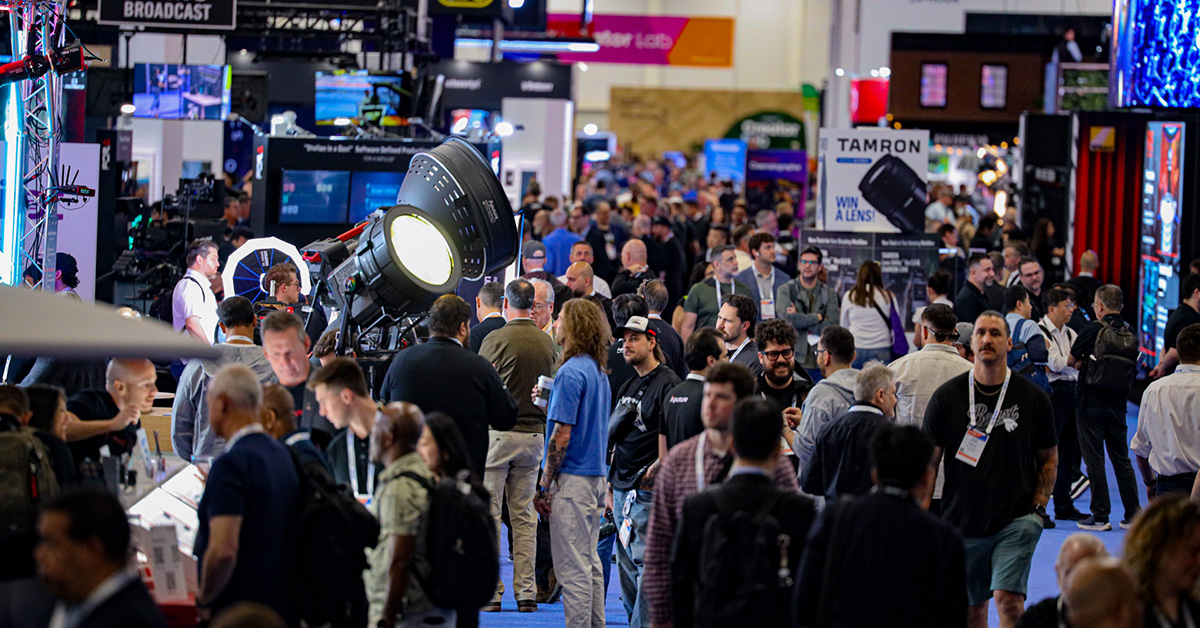
NAB is no longer just broadcast people talking to broadcast vendors on the show floor.
The audience shows that the market is changing. The show reported 58,000+ registered attendees coming from 146 countries. Almost half of them visited NAB for the first time. More content creators, a strong sports and e-sports presence, and corporate giants. Quite a diversity.
But the new audience is running into classic media problems: reliability, latency, rights, security, monetization, quality, and workflow control. And conversations about them go far beyond the halls of the Las Vegas Convention Center.
From “cloud-first” to “cloud-appropriate”
The statement “move everything to the cloud” is no longer valid. But “bring everything back” is not really it either.
It’s time for cloud repatriation, but there’s no sense in rushing to move everything to local storage. So a real star of NAB 2026 was hybrid, choice-first architecture.
Cost, redundancy, egress fees, multi-cloud, vendor dependency, TCO (total cost of ownership) and ROI (return on investment) are real NAB floor conversations.
Customers want predictable costs, less egress drama, more sovereignty, and more control over where their workloads run. All without losing cloud-native flexibility and scalability.
Capability-based thinking is a new approach. Companies want to run workloads where they make the most sense, which seems like a smart choice.
AI is doing real jobs, not magic
AI is no longer the new kid with the shiny future. It has finally grown up and found a job in the real world.
AI is used for metadata, archive search, transcription, translation, highlights, content discovery, playlist creation, and production assistance. Meaning, AI has less sparkle but more usefulness.
Agentic AI’s usage grows, too. According to Streaming Media, vibe-coding makes things such as integrating, prototyping, and working on technical debt easier.
Agentic AI growth means vendors need strong APIs, clean documentation, and integration-friendly architecture. The closer it is to standard, the better.
Security measures are protecting the revenue
Pirates are becoming faster and more sophisticated, invading different parts of the workflow.
Anti-piracy protection cannot be a post-event cleanup job. It needs to sit closer to packaging, DRM, token logic, player behavior, CDN monitoring, watermarking, and real-time moves.
DRM matters, but it’s not enough on its own. Encryption, geo-fencing, watermarking, token management, key rotation, client app integrity, API protection, incident response, and AI monitoring can do a good job if they’re implemented smartly.
It’s impossible to beat the pirates at their own game, but there’s a way to make their lives harder. Premium streaming now needs layered protection and supply chain visibility. This requires vendors to become good friends and make content security great again.
C2PA: from fancy letters to real end-to-end workflows
AI tools make it easy to manipulate videos shared without attribution. Platforms can’t guarantee the original source of the information, which is causing widespread uncertainty about video authenticity.
Trusted media had real momentum at NAB.
There were multiple conversations on and off the floor, papers, even demos, including the demo we did together with Qualabs and WDR. The demo demonstrates a dynamic solution that enables broadcasters, OTT platforms, and content owners to attach verifiable authenticity information to live and VOD streams. The solution helps audiences understand where content comes from and whether it has been altered. Initial examples include news stations adding station IDs to help verify sources and combat fake news.
Just a hunch: it seems like trusted media, aka C2PA adoption, will start in Europe, and other world regions will follow.
Anyway, there’s still a lot of work to be done. There’s an ongoing process of shaping workflow standards, defining the ideal UI, and obtaining the necessary certifications. The future is happening right here, right now.
Sports streaming is still the ultimate workflow stress test
Sports were everywhere at NAB.
We consider sports streaming a perfect stress test for the workflow, as it makes every weak spot visible. We’re talking latency, scale, spikes, DRM, piracy, rights, personalization, multi-view, ad timing, betting overlays, failover, device reach. Then add the pressure of fan expectations. (As a fan of American football, I get it. We can be pretty tough!)
The sports story is shifting from “deliver the stream” to “orchestrate the experience.” Highlights, overlays, alternative feeds, multiview, personalization, betting-related latency pressure, and flexible monetization all add backend complexity.
A better fan experience requires companies to do some heavy lifting with their tech and ensure they’re ready for the big sports events of 2026.
Archives starring in the monetization story
Yes, it’s all about the money!
It’s no surprise that monetization is the real trend.
Making the most of your existing archives, squeezing extra revenue from pop-up and regional channels, promoting premium shoulder content, getting more creative with ad launches by using context and user data: they’re all logical decisions.
FAST no longer means “launch a free channel.” NAB grouped FAST with SVOD, AVOD, bundling, and ads under the same “getting more money” umbrella.
Of course, AI is a secret sauce. No more cold storage graveyards. AI can easily turn unstructured video into searchable metadata that becomes a real asset. The only thing you need to do is package, stream, and monetize it. All without drowning in costs.
There’s something more than features
AI-assisted development and “vibe coding” make it easier to copy, generate, and customize software features. It’s less “what the product can do,” and more “who’s gonna work with me.”
Openness, partnerships, and collaboration matter. The feature list alone means nothing if it’s not backed by a team you can trust.
This year’s “off the floor” time was even more valuable than “on the floor” meetings. We are humans, after all! It’s good we keep reminding ourselves of this.
Crystal ball time: what’ll NAB Show 2027 be about?
What does NAB Show's future hold? That’s the question we kept asking ourselves this year. It seems like West Hall is getting smaller, and fewer companies are allocating big budgets to the show.
Is it worth going next year and bringing a huge on-the-floor presence? I’m not an oracle, and I can’t give you the “right” advice.
But is it worth going next year to see people from the industry, discuss what matters, and connect? Yes. Definitely. No doubt.